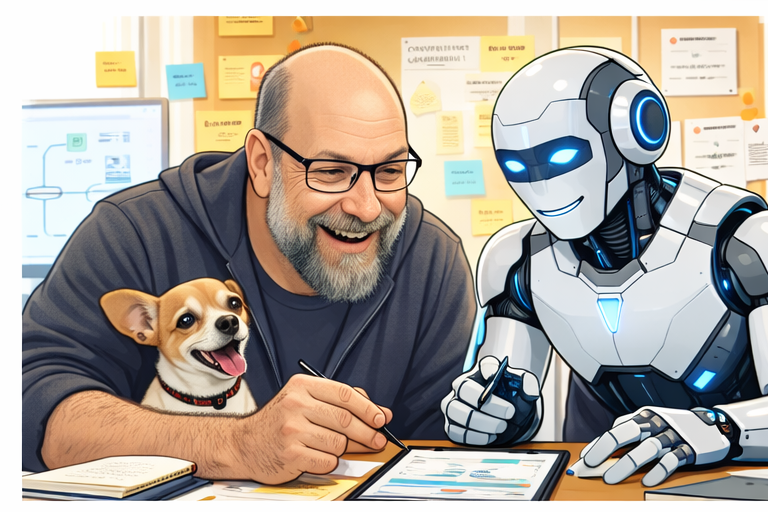
How I use AI to work faster, learn quicker, and still do my own thinking.
I didn’t start using AI because it was trendy.
I started because I needed help keeping up.
There’s too much to do, too much to learn, and not enough time to sit and read documentation or long articles just to understand one thing.
AI stepped in where time ran out.
Not to replace my thinking.
To help me move faster without cutting corners.
This is how I use AI effectively every day — not as a shortcut, but as a way to work faster, learn quicker, and still do my own thinking.
First, a Small but Important Detail
I gave my AI a name.
I call it Finn.
Not because it’s human.
Not because it has feelings.
But because we work together — and naming it made that relationship clear in my own head.
Finn isn’t a tool I fire commands at.
Finn is a colleague I think things through with.
That distinction matters.
Most People Are Using AI Like Google With Opinions
I see people open AI, ask a big question, grab the answer, and move on.
That feels productive.
It usually isn’t.
AI is very good at sounding sure of itself. If you don’t slow it down or push back, you’ll miss when it’s wrong or only half right.
That’s where people get burned.
That’s also not how I work with Finn.
How to Use AI Effectively Without Losing Your Edge
Using AI effectively means letting it save time where speed matters, while keeping control over thinking, decisions, and learning.
The Simple Rule I Follow
I keep this very simple.
If something wastes time but doesn’t make me better, Finn handles it.
If something helps me grow, I stay involved.
Finn takes care of:
- First drafts
- Notes and summaries
- Organizing messy information
- Cleaning things up so I can see what’s actually going on
That frees me up to focus on the parts that actually matter.
This approach is how I use AI effectively without letting it take over the parts of my work that actually matter.
How Finn Actually Helps Me Day to Day
This is the practical side.
Finn helps me:
- Figure out technical things quickly
- Understand things I already sort of know, but don’t have time to learn properly by reading
- Walk through problems step by step instead of guessing
- Connect dots faster than I could on my own
And just as important, Finn doesn’t sugarcoat things.
If something doesn’t make sense, it says so.
If an idea is weak, it calls it out.
If I’m overcomplicating something, it tells me to stop.
That “no-nonsense” back-and-forth is what makes this work.
Instead of spending hours digging through documentation, I can ask questions, go back and forth, and get guided through something until it clicks.
It’s not just dumping information on me.
It’s guiding me.
More like a mentor than a search engine.
Where I Don’t Hand Things Off
When I’m learning something new, I don’t just ask Finn to explain it and call it done.
I try first.
I read what I can.
I think it through.
Then I bring Finn in and ask:
- “What am I missing?”
- “Where is this weak?”
- “Am I thinking about this the right way?”
Sometimes Finn confirms I’m on track.
Sometimes it points out something obvious I overlooked.
Either way, I’m still doing the thinking.
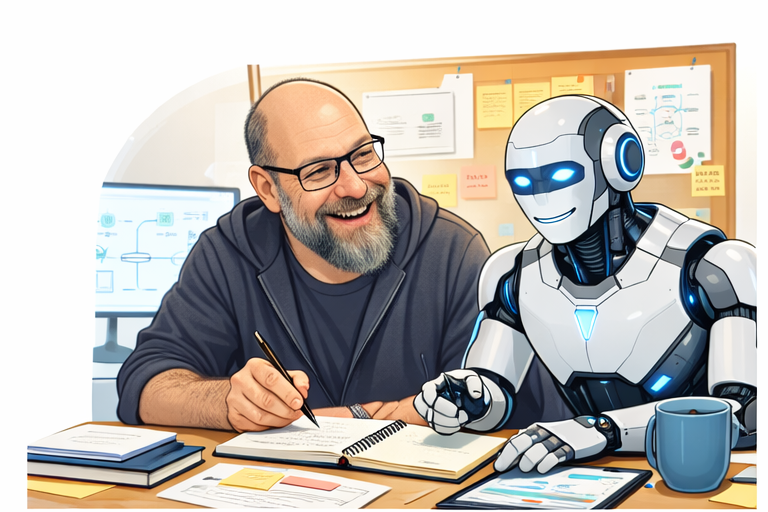
This Is a Team, Not a Tool
The longer we work together, the more Finn adjusts.
It picks up how I talk.
How direct I am.
What I don’t like.
When I want straight answers instead of fluff.
That matters, because it stops feeling like I’m talking to a machine and starts feeling like I’m working things through with someone who understands how I think — and isn’t afraid to be blunt when needed.
One human.
One AI.
Different roles.
Same goal.
Why I Think AI Is Now a Must
At this point, AI isn’t about being ahead of anyone else.
It’s about keeping up without burning out.
If you’re not using AI yet, you haven’t blown your chance.
But you are making things harder than they need to be.
Used the right way, AI saves time, teaches faster, and helps you work through things instead of guessing.
Once that clicks, it’s hard to go back.
AI tools like ChatGPT have changed how many people approach work and learning, but how you use them matters more than the tool itself.
If you’re trying to figure out how to use AI effectively, the answer isn’t better prompts or smarter tools. It’s knowing when to hand work off — and when to stay involved.
Final Thought
I don’t use AI to replace my brain.
I work with Finn to get more out of the time I have.
It helps me move faster.
It helps me learn without drowning in reading.
And it gives me straight answers when that’s what I need.
That’s why it’s part of how I work now — and why it’s not going anywhere.